Transparency in scrap selling has long been discussed, yet rarely achieved in practice. For many Indian industries, scrap transactions still happen through informal negotiations, limited buyer visibility, and minimal documentation. While scrap may not be the core product, the way it is sold has a direct impact on revenue, compliance, and operational discipline.
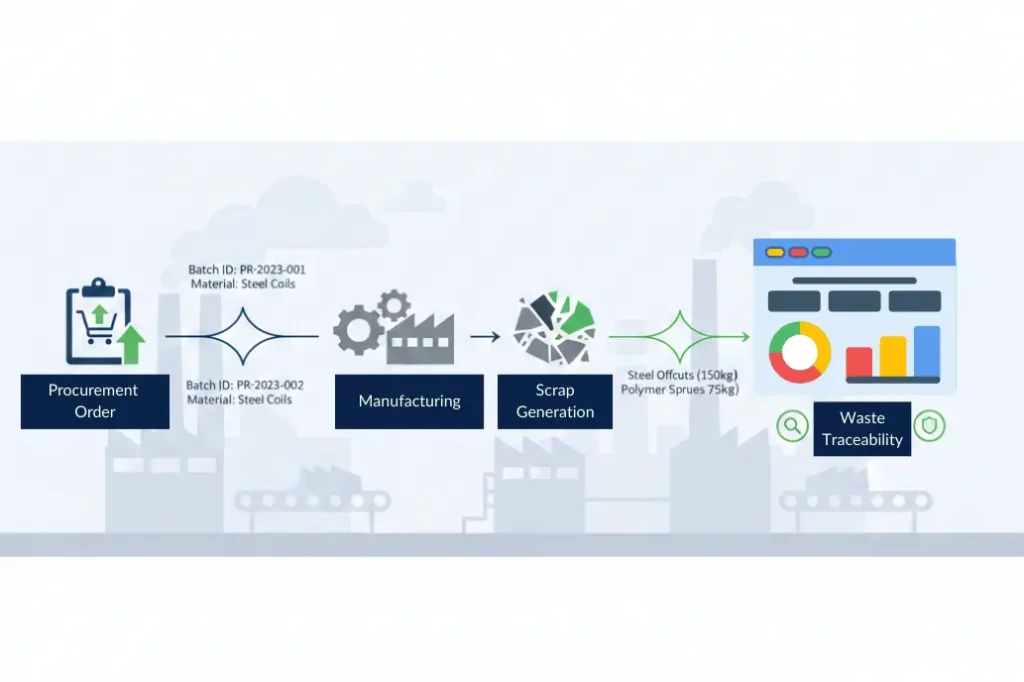
The lack of transparency usually begins at the source. Scrap is generated daily, but rarely logged with precision. Without a structured scrap register, quantities are estimated, grades are mixed, and buyers price in uncertainty. That uncertainty becomes a hidden cost for the seller.
Another challenge is buyer credibility. Industries often rely on familiar local players, not necessarily verified or compliant ones. While convenience plays a role, this approach limits price discovery and introduces risk, especially as EPR requirements and traceability expectations increase. Selling scrap without knowing who ultimately handles it is no longer acceptable for many organizations.
This is where verified buyer networks become critical.
Scrapeco addresses this gap by enabling industries to sell scrap in a controlled, transparent environment. Instead of open-ended negotiations, scrap is listed digitally with clear details like category, quantity, and location. Verified buyers then engage based on accurate information, not assumptions.
Transparency here is not just about visibility. It is about standardization.
When scrap is logged through a digital scrap register, every transaction follows the same structure. This creates consistency across plants, shifts, and teams. Buyers know what they are bidding on. Sellers know what they are dispatching. Disputes reduce because expectations are aligned before the pickup happens.
Verification plays a central role in this ecosystem. Scrapeco’s buyer verification process ensures that industries interact with certified scrap buyers and recyclers. This matters not only for pricing but also for accountability. Verified buyers are more likely to follow proper weighing practices, documentation norms, and payment discipline.
The impact of verified buyer access is visible in multiple ways:
- Improved price discovery due to competitive engagement
- Reduced dependency on a single buyer
- Better alignment with compliance and EPR requirements
- Stronger audit readiness due to cleaner transaction trails
Logistics transparency strengthens this further. Scrap pickup scheduling through a digital interface removes ambiguity. GPS movement tracking ensures that scrap movement is visible from dispatch to delivery. Photo-based pickup proof captures condition and quantity at the point of handover, creating a factual record instead of verbal confirmation.
This level of traceability is increasingly important. As sustainability reporting becomes data-driven, industries need more than invoices. They need proof of movement, handling, and handover. Transparent scrap selling supports ESG reporting by replacing assumptions with evidence.
Another often-overlooked benefit is internal alignment. When scrap sales are managed digitally, finance, operations, and sustainability teams work from the same data set. There is no confusion over quantities sold, value realized, or timelines. This alignment reduces internal friction and strengthens governance.

Rather than pushing industries into immediate commitments, Scrapeco lowers the barrier to organized scrap selling. By allowing companies to register at no cost and explore structured workflows over a limited trial period, it enables teams to experience transparency before formal adoption. Scrap can be listed digitally, buyer engagement happens within a verified network, pickups are scheduled and tracked, and EPR-ready data is maintained through a single dashboard. The intent is not to accelerate selling but to let industries understand the value of visibility at their own pace.
Globally, scrap markets are moving toward verified, traceable ecosystems. India’s industrial sector is following the same path, driven by regulation, investor scrutiny, and operational maturity. Transparent scrap selling is no longer a differentiator. It is becoming a baseline expectation.
If transparency is now expected everywhere else in the supply chain, why should scrap be treated differently?