Imagine walking through a city where every bin whispers secrets. Some shout danger “Keep away, I will poison you!” Others sigh softly “I’m harmless… or am I?” This is the strange world of waste: hazardous and non-hazardous, the yin and yang of what we throw away, and yet, the very thing that might decide if civilization thrives or collapses in the next few decades.
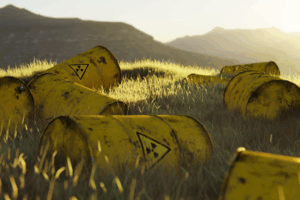
Hazardous waste doesn’t mince words. It’s the stuff you really don’t want near your soil, water, or lungs: industrial chemicals, heavy metals, toxic solvents, medical leftovers. It’s volatile, unpredictable, and unforgiving. Think about the recent chemical spill in Michigan, 2024, where thousands of liters of industrial sludge snuck into the river overnight, forcing entire towns to turn off their taps. This is waste that doesn’t just rot quietly: it attacks, seeps, spreads, and sticks around for decades.
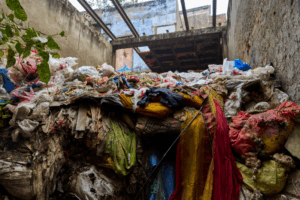
Then there’s non-hazardous waste, the quiet trickster. Plastics, food scraps, paper, packaging—it looks harmless, maybe even “manageable.” But give it time in a landfill or the ocean, and it starts a slow-motion apocalypse. Microplastics in our water, methane clouds from decomposing organics, clogged drainage causing floods. Whereas, non-hazardous waste doesn’t scream danger; it hums it. In Kerala last monsoon, over 1,500 tonnes of urban waste swept into the backwaters, leaving local fishing communities struggling and scientists scrambling to measure microplastic contamination.
Here’s the kicker: both types of waste are fueling climate change. Hazardous waste poisons soil and water, disrupting ecosystems and food chains. Non-hazardous waste releases greenhouse gases silently. Together, they are the twin engines of our environmental train wreck. Global waste production is projected to hit 3.8 billion tonnes by 2050. That’s not just a statistic, it’s a literal mountain of stuff we either recycle, repurpose, or let destroy the planet.
Look at real-time chaos for proof. London’s “Rainham Volcano,” an illegal landfill, has been spewing toxic smoke into neighboring communities. Fish in Southeast Asia’s Mekong River are dying from plastics that originated hundreds of miles upstream. In Spain, floods carried a mix of chemicals and trash into protected wetlands, leaving birds and aquatic life at risk. Even non-hazardous waste, when unmanaged, can trigger public health crises leading to flooding, disease, and urban blight are not futuristic nightmares; they’re happening now.
But here’s where the story doesn’t have to end in doom. Circular economy thinking flips the script. Instead of “waste,” we see “resource.” Hazardous materials can be neutralized, stored safely, or even upcycled into industrial inputs. Non-hazardous waste can be recycled, composted, or turned into energy. Look at Bangalore’s 2025 composting initiative: thousands of tonnes of food and garden waste converted into biogas, powering homes while reducing landfill pressure. These solutions show that the problem isn’t waste, it’s how we think about it.
We are at a crossroads. Keep tossing, burying, or burning our waste blindly, and we’re setting up a future of flooded cities, poisoned rivers, and toxic air. Or we can get smart: design products to be reused, segregate waste diligently, and treat every piece of discarded material as a potential resource. Hazardous and non-hazardous waste won’t disappear, but we can choose whether it destroys or sustains.
Waste is loud if you listen. Hazardous waste screams, non-hazardous hums, and together they tell the story of a civilization on the edge. The question is: are we going to keep ignoring the whispers, or will we start responding? Every plastic bottle recycled, every chemical disposed of safely, every organic scrap composted; it’s a vote for the planet we want to live in. Civilization, after all, is not about how much we produce, it’s about how wisely we handle the leftovers of that production.
It’s time to stop pretending trash is someone else’s problem. It isn’t. It’s ours. And how we deal with it today will decide if the cities, rivers, forests, and oceans we love survive tomorrow. Waste isn’t just garbage, it’s a reflection of our choices, our priorities, and our respect for life itself.
Listen closely; it’s talking, and it won’t wait forever.