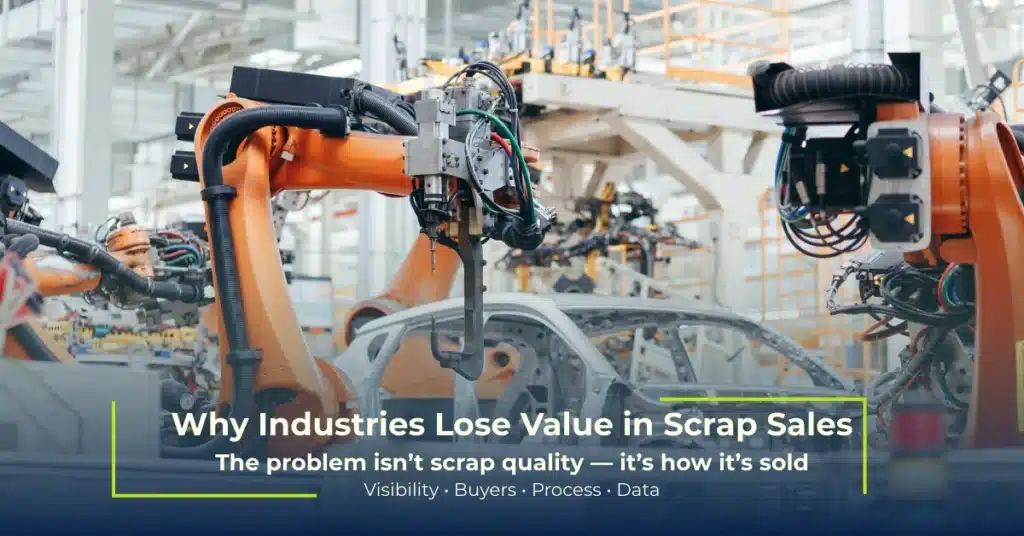
For decades, scrap management in India was built on relationships, local networks, and phone calls. Prices varied by mood, availability, and negotiation skills rather than material quality or real demand. Buyers were hard to verify. Sellers relied on “the usual guy”. And industries lost both value and traceability in the process.
The shift to online scrap buying platforms is rewriting this playbook entirely.
What makes this shift so powerful is not just digital convenience, it’s the structural discipline that online systems bring into a market that was fragmented for years.
An online marketplace built for industrial scrap does three things exceptionally well:
- Standardises quality and grading: Every category is logged consistently.
- Improves pricing transparency: Multiple verified buyers compete simultaneously.
- Creates traceability: Digital scrap registers, GPS tracking, and documentation become part of the workflow.
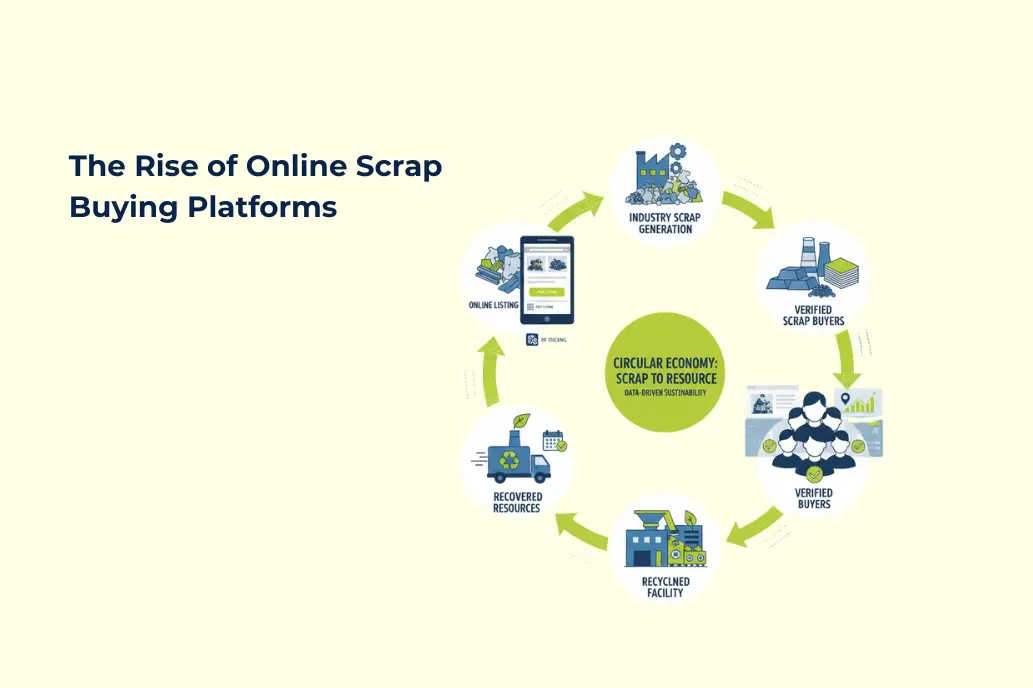
Scrap becomes a resource, not residue.
Why industries are moving toward online scrap buying?
- Better scrap purchase value due to multiple competitive bidders
- Verified and compliant buyers reduce operational risks
- Digital logs reduce disputes on weight, grade, and pricing
- Scrap pickup scheduling optimises time and labour
- Buyers get a predictable supply stream with documented movement
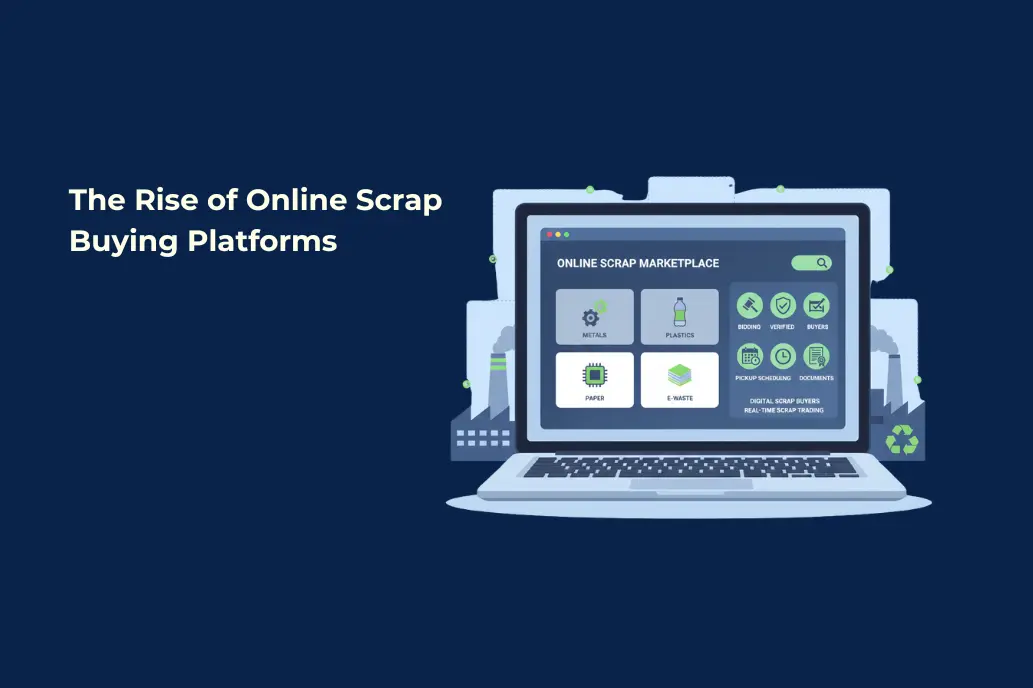
Platforms like Scrapeco allow industries to “buy scrap online” or post “scrap sales” through a structured, transparent, GPS-tracked process. Even for smaller units searching for “old scrap buyers near me,” the marketplace becomes a trust layer.
Realistic global inspiration
China, Southeast Asia, and parts of Europe are already running highly structured digital scrap ecosystems. For example:
- Mid-sized recycling hubs in Vietnam grew their scrap procurement volumes by 40% after shifting to online competitive bidding systems.
- Large European metal recyclers now rely on batch-wise digital scrap registers to ensure cross-border traceability.
- Several African industrial zones adopted marketplace models that reduced price volatility by up to 22%.
India is heading in the same direction and platforms like Scrapeco serve as the bridge.
A realistic scenario from India
Imagine a Tier-3 plastic recycling unit that buys 120–150 tonnes of high-density scrap each month. Earlier, they waited for manual leads, uncertain pricing, and inconsistent supply.
After adopting a structured digital marketplace model:
- Verified vendors increased their supply capacity
- Quality disputes dropped by 30% due to photo documentation
- Pricing stabilised
- Procurement planning became predictable
- Movement tracking reduced theft and pilferag
When scrap becomes predictable, business becomes scalable.
What the future looks like?
Scrapeco is preparing next-generation capabilities such as:
- automated compliance documents
- waste audit integration
- predictive procurement analytics
- dynamic price benchmarking
The shift is clear: the future of scrap management is data-led, transparent, and platform-driven.
When scrap moves through your organisation, does it behave like a cost centre or a supply chain you’ve yet to optimise?