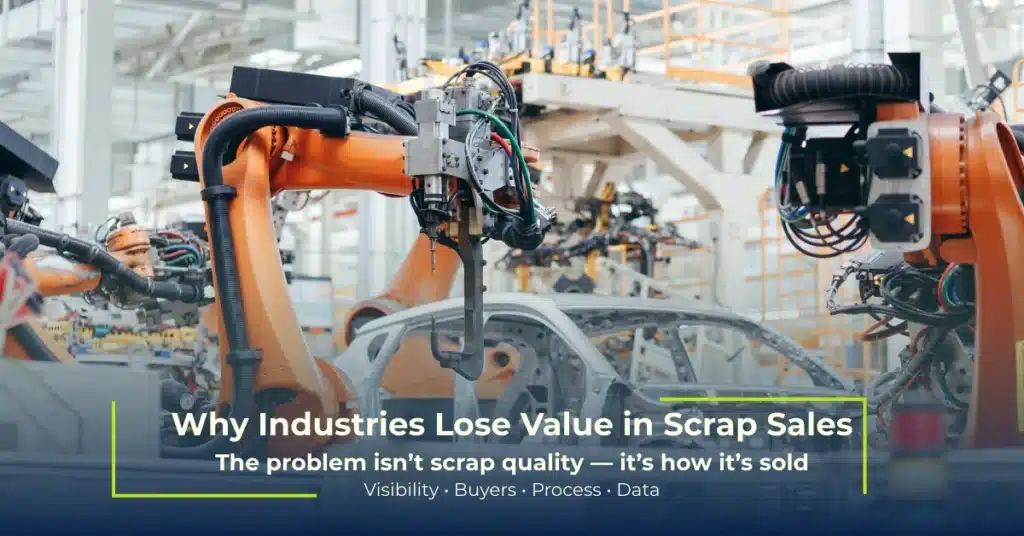
Procurement has traditionally been evaluated on cost, availability, and delivery timelines. Today, that framework is incomplete. Sustainability, traceability, and regulatory responsibility have moved from side conversations into the core of procurement decision-making. Nowhere is this shift more visible than in how industries manage waste, scrap purchase, and Extended Producer Responsibility.
Sustainable procurement is no longer limited to sourcing greener raw materials. It extends into what happens after materials are consumed, discarded, or transformed into scrap. This is where EPR and waste traceability intersect with procurement strategy.
Under EPR frameworks, producers are accountable for the lifecycle impact of materials they introduce into the market. That accountability flows backward into procurement choices. Materials that generate untraceable waste introduce regulatory risk. Vendors that cannot provide data or documentation weaken compliance readiness. Scrap that leaves the premises without records breaks the chain of responsibility.
Traceability begins at the point of generation. When scrap is logged into a digital scrap register, categorized accurately, and linked to procurement batches, waste data becomes auditable. This linkage allows procurement teams to understand how sourcing decisions influence waste volumes, recovery value, and compliance exposure.
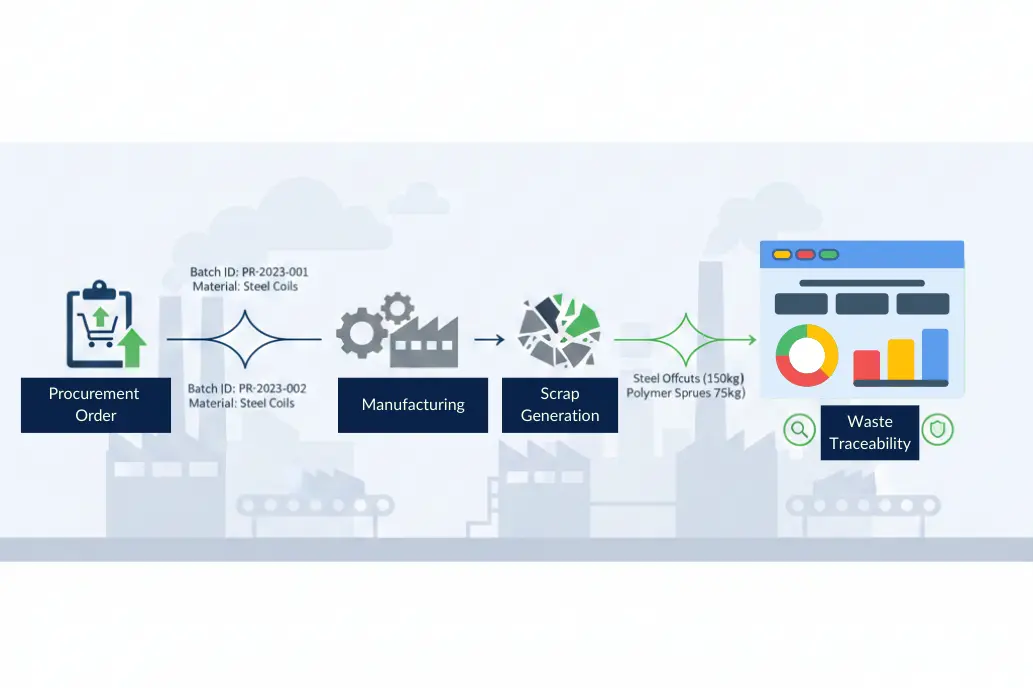
Digital platforms enable this integration by connecting procurement, operations, and waste management workflows. Scrapeco’s approach reflects this alignment. Through its portal, industries can schedule scrap pickups, log scrap digitally, track movement via GPS, capture photo-based proof, and maintain EPR-ready data — all without disrupting existing procurement systems.
The value of this integration becomes clear in supplier evaluation. Sustainable procurement increasingly considers:
- Whether vendors support compliant waste handling
- If scrap buyers and recyclers are verified
- Whether data can be produced during audits
- How waste outcomes affect ESG disclosures
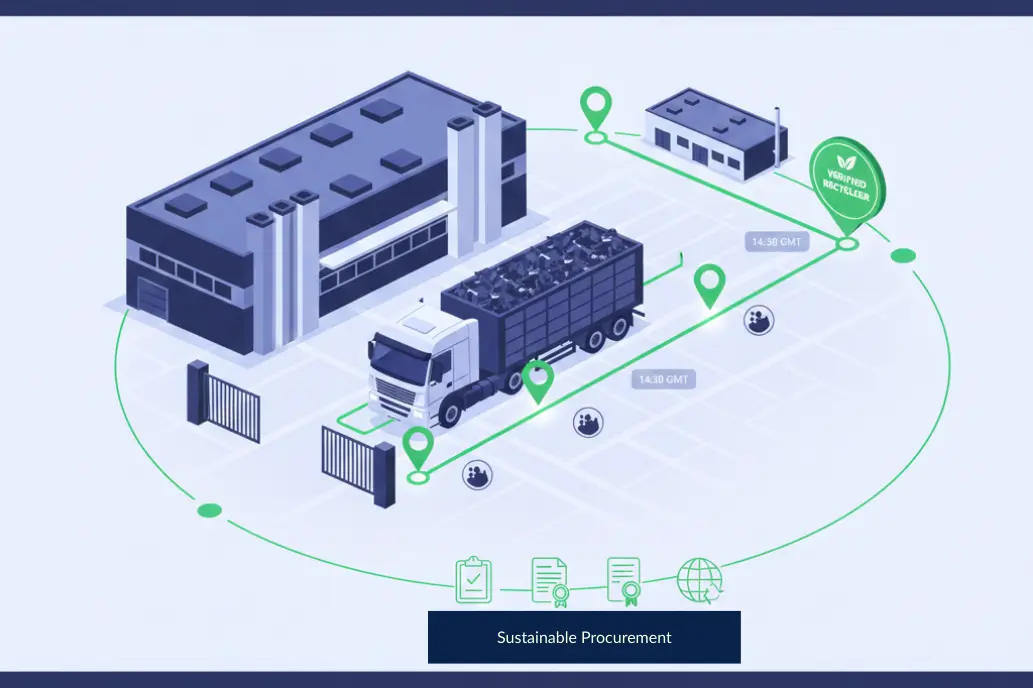
When procurement teams choose partners through digital marketplaces rather than informal channels, the risk profile changes. Searching for old scrap buyers near me becomes a structured decision supported by verification and documentation. Scrap sales move from ad-hoc disposal to traceable transactions.
Globally, supply chains are under pressure to prove circular intent. Automotive, electronics, FMCG, and infrastructure sectors are aligning procurement KPIs with waste reduction, recycling rates, and EPR fulfillment. This shift requires data continuity. Manual records cannot scale under regulatory scrutiny.
Analytics plays a crucial role here. Procurement leaders can access dashboards that show:
- Waste generation linked to specific materials
- Scrap value recovered versus lost
- Performance differences between suppliers
- Trends impacting EPR obligations
This insight informs smarter sourcing. Materials that generate excessive waste can be reconsidered. Packaging choices can be optimized. Supplier contracts can incorporate waste responsibility clauses.Sustainable procurement is not about slowing business down. It is about reducing hidden costs. Untracked waste leads to compliance gaps. Informal scrap purchase decisions create audit vulnerabilities. Lack of traceability increases reputational risk.
Platforms like Scrapeco are being built to address this reality. By combining online scrap buying and selling, vendor verification, movement tracking, analytics, and EPR data readiness, they support procurement teams navigating a more regulated future.
The next phase of procurement maturity will not ask whether waste is managed. It will ask how well it is measured, traced, and reported.
Future enhancements such as smart waste audit tools and automated certificate management will deepen this integration further, but the foundation is already clear: procurement and waste responsibility can no longer operate in silos.
The real question for procurement leaders is:
Are your sourcing decisions aligned with the waste accountability your brand will be judged on tomorrow?