Transparency in scrap selling has long been discussed, yet rarely achieved in practice. For many Indian industries, scrap transactions still happen through informal negotiations, limited buyer visibility, and minimal documentation. While scrap may not be the core...
Unorganized scrap selling rarely shows up on balance sheets, yet its cost quietly compounds over time. For manufacturing companies, scrap is often managed informally, handled by local buyers, negotiated over calls, recorded manually, and moved without digital trails....
For most industries in India, scrap is still treated as a byproduct, something to dispose of quickly rather than manage strategically. Yet scrap holds real monetary value. Across manufacturing, FMCG, pharma, infrastructure, and warehousing, companies lose a...
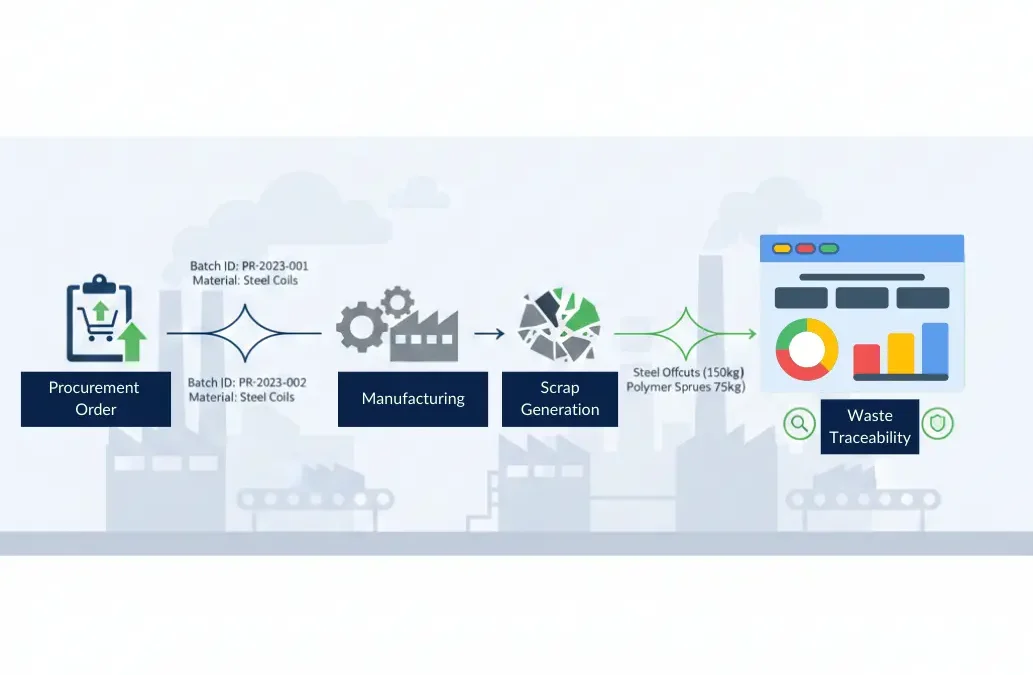
Procurement has traditionally been evaluated on cost, availability, and delivery timelines. Today, that framework is incomplete. Sustainability, traceability, and regulatory responsibility have moved from side conversations into the core of procurement...
For decades, scrap trading has operated on fragmented information, informal pricing, and manual coordination. Deals were driven by personal networks, phone calls, and rough estimates. While the industry powered recycling and material recovery at scale, transparency...